
The components of a tax representative's cost
The price of a tax representative is not a single figure. It is generally broken down into several distinct elements that are important to identify before signing a mandate. Understanding this structure will allow you to compare like-for-like offers and avoid unpleasant surprises during the engagement.
The three main components are:
- Representation fees: this is the annual or monthly flat fee covering the administrative management of the mandate, correspondence with the DGFiP, and keeping your file up to date.
- Periodic return charges: some providers invoice each VAT return (monthly or quarterly CA3) separately. Others include a set number of returns in their flat fee.
- Bank guarantee: the DGFiP may require the tax representative to provide a bank surety covering default risk. This cost is sometimes passed on to the client, partially or in full.
Price ranges by situation in 2026
The rates charged in 2026 vary significantly depending on the nature of the engagement and the volume of activity. Here are indicative ranges:
| Type of engagement | Indicative annual range |
|---|---|
| VAT — small non-EU company (low transaction volume) | €800 – €1,500 |
| VAT — medium volume (e-commerce, marketplace) | €1,500 – €3,000 |
| VAT — high volume or complex transactions | €3,000 – €8,000 and above |
| Real estate capital gains (one-off engagement) | €500 – €2,000 per file |
| Non-resident rental income (annual) | €600 – €1,800 |
These ranges are indicative. Actual rates depend on the service provider, the region, and the complexity of the file. Putting providers in competition through our list of accredited representatives is the best way to obtain several comparable quotes.
What influences the rate
Several parameters directly influence the level of fees. Understanding them will help you negotiate more effectively and contextualise the quotes you receive.
- Number of annual returns: a company subject to monthly VAT generates 12 CA3 returns per year, compared to 4 on a quarterly basis. Each return represents chargeable work.
- Complexity of transactions: intra-group flows, triangular transactions, multichannel e-commerce, or distance sales involving several countries are more complex to manage than a straightforward recurring service.
- Country of establishment: files involving countries with which France has no administrative assistance convention (Cayman Islands, Panama, etc.) are often handled with heightened diligence, which is reflected in fees.
- Management of potential VAT refunds: recovering a VAT credit from the French tax authorities requires a specific procedure and may be invoiced separately.
- Working language: some firms charge a supplement for managing files in a foreign language.
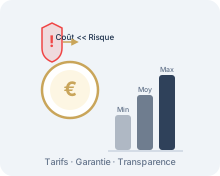
Cost vs risk: the key equation
When faced with a quote that may seem high, it is useful to weigh the cost against the risks associated with the absence of a tax representative or with inadequate representation. The penalties for non-filing of VAT returns in France are 10% of amounts owed in the event of late payment, and can reach 40% in the case of deliberate non-compliance. A reassessment covering several years can represent tens of thousands of euros.
Furthermore, in a real estate sale, a French notary is required to block the sale proceeds pending presentation of an accredited tax representative if the capital gain exceeds €150,000. Delaying this step can freeze the transaction for several weeks, resulting in contractual penalties.
To find the right provider for your budget and situation, consult our list of DGFiP-accredited tax representatives, ranked by speciality and type of clientele.